

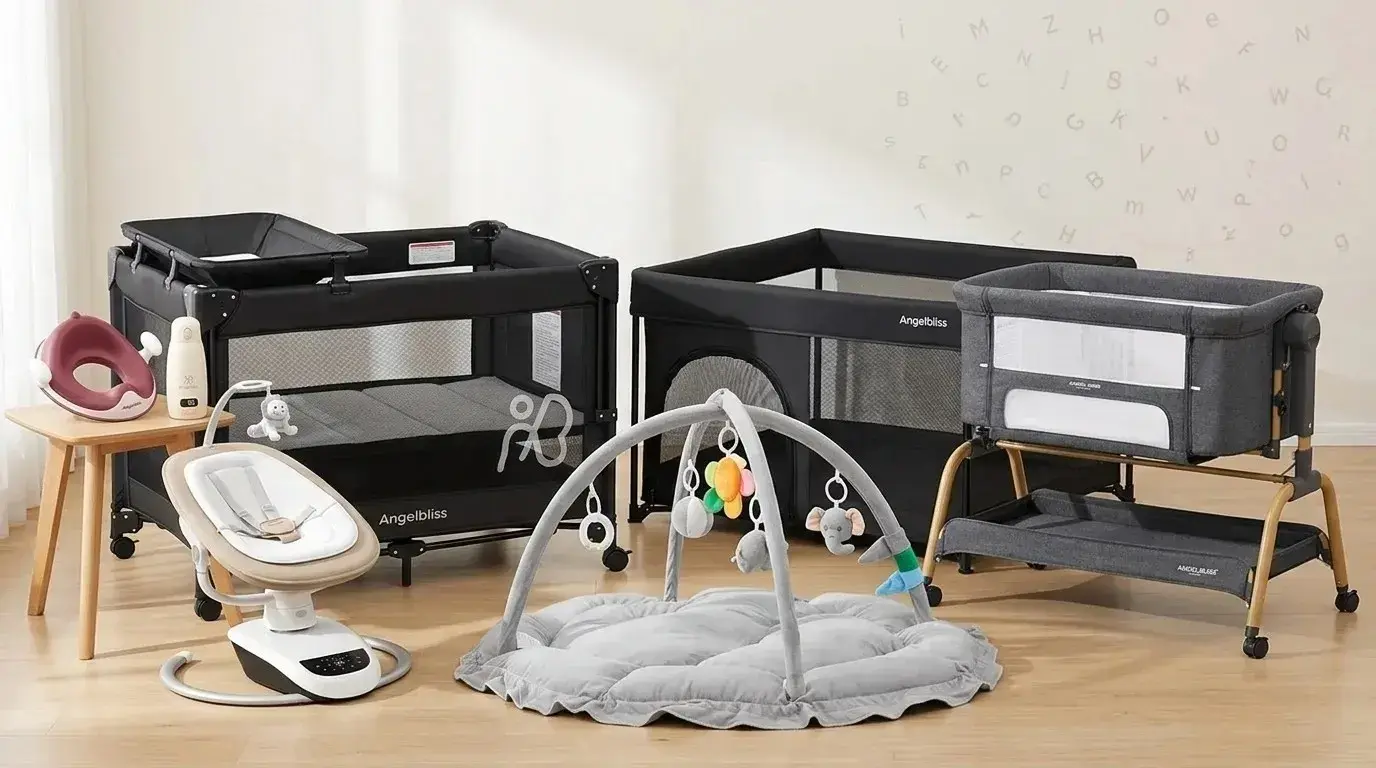
Baby gear is one of the few product categories where price genuinely doesn't correlate with quality, at least not in the way marketing makes it seem. A $1,695 smart bassinet and a $140 basic bassinet both accomplish the same core function of providing a safe sleep space for a newborn. A $500 stroller and a $180 stroller both roll safely. The difference is convenience features, styling, and brand cachet, not safety. That's why building a list of budget-friendly baby essentials doesn't mean cutting corners on the things that actually matter. It means knowing which categories reward premium spending and which don't.
This guide walks through the specific baby essentials worth spending less on, the categories where paying more genuinely earns you something, and honest safety guidance for anything a parent-to-be needs to know before they buy. You can also check our own AngelBliss coupons code for verified discounts on baby essentials, since even a budget-focused approach benefits from timing purchases around real sale windows.
The Real Rules of Budget Baby Shopping
Before jumping into specific picks, a few evidence-based principles that separate smart savings from dangerous cost-cutting:
All new car seats sold in the US meet federal safety standards. The cheapest current-model car seat legally sold in the US has to pass the same crash tests as the most expensive one. Convenience features, ease of installation, weight, and adjustability differ, but baseline safety does not. Cosco's budget seats and Evenflo's EveryKid convertible have been specifically praised in independent testing for delivering strong safety at meaningfully lower prices.
The American Academy of Pediatrics has been explicit about safe sleep basics. A firm, flat crib mattress with a fitted sheet is the entire safe sleep setup. That's it. Elaborate bedding sets, sleep positioners, and crib bumpers aren't just unnecessary, they've been banned from manufacture and sale in the US since 2022 under the Safe Sleep for Babies Act.
Newborns have specific preferences you can't predict. Multiple pediatricians and mom-community sources agree: buying bulk starter sets of a single bottle brand before your baby arrives is one of the most common expensive mistakes. Newborns often reject specific nipple shapes, leaving parents with a $60 box of unusable plastic. Buy one or two individual bottles from different brands first, then commit to the winner.
Consumables get used constantly and rarely arrive as gifts. Point your own spending at diapers, wipes, and formula rather than big-ticket items that friends and family often gift through registries.
Secondhand can be genuinely safer than a cheap new alternative. Gently used gear from a trusted source (a friend whose child just outgrew it, a verified resale site like Good Buy Gear) is often higher quality than the cheapest new equivalent. Just verify the item hasn't expired (car seats have expiration dates), has never been in a crash if it's a car seat, and hasn't been recalled.
Budget-Friendly Baby Essentials Category by Category
Safe Sleep Setup
What to spend on: A firm, flat crib mattress and a couple of fitted sheets. This is genuinely the entire required safe sleep setup for a newborn according to AAP guidance.
Budget-friendly picks: A basic full-size crib around $150 to $250 works just as safely as a $600 designer crib. The Dream On Me 2-in-1 Portable Crib around $140 is a compact, safe option for smaller spaces or as a secondary sleep space.
What to skip: Crib bumpers (federally banned in the US since 2022), elaborate bedding sets, weighted sleep sacks marketed for infants under 12 weeks, sleep positioners, and pillows. None of these belong in a crib with a newborn.
Diapering
What to spend on: Consumable diapers and wipes. This is your daily-use category and where costs add up fastest.
Budget-friendly picks: Trusted brands like Pampers Swaddlers around $25 for a 92-pack deliver excellent absorbency and skin protection at reasonable prices. Store brands from major US retailers like Costco (Kirkland) and Target (Up & Up) are often manufactured to comparable quality standards at even lower per-diaper costs.
Smart savings: Diaper subscription services from brands like Honest and Coterie offer autoshipping schedules that prevent last-minute drug store runs, and Honest specifically allows exchanges for the next size up when your baby starts having leaks. Set up subscriptions after your baby is born so you're sized correctly.
What to skip: Wipe warmers (babies adapt to room-temperature wipes without issue), elaborate diaper disposal systems (regular trash bags emptied regularly work fine), and premium organic diaper subscriptions unless environmental impact is your specific priority.
Feeding
What to spend on: A quality nursing pillow if you're breastfeeding or bottle-feeding often. Independent testing consistently praises the My Brest Friend nursing pillow for its deep, flat surface, adjustable waistband, and firmness that works for many body types.
Budget-friendly picks: For bottles, budget-friendly options like Philips Avent Natural around $30 for a 3-pack and MAM Easy Start Anti-Colic around $20 for a 3-pack perform well without the premium price. Individual single bottles let you test what your baby prefers before committing.
Smart savings: If insurance covers a breast pump (which most US insurance plans do), don't buy one out of pocket. Verify coverage during pregnancy so you can order through insurance rather than paying $150 to $400 out of pocket for a comparable pump.
What to skip: Bottle sterilizers (dishwasher on hot cycle or boiling water works just as well), specialized baby food makers (a regular blender or fork handles solids introduction), and elaborate formula preparation gadgets unless you're specifically formula feeding twins or triplets.
Car Seats
What to spend on: Correct installation. A budget car seat installed correctly is safer than an expensive car seat installed wrong. Free car seat installation checks are available through most local fire departments, hospitals, and Safe Kids USA coalitions.
Budget-friendly picks: Cosco's convertible car seats (around $70 to $130) meet the same federal safety standards as premium alternatives. The Evenflo EveryKid ($150 to $175) has been specifically praised by independent testing for delivering strong safety features (energy-absorbing foam, side-impact protection, no-rethread harness) at a fraction of the price of premium seats.
What to skip: All-in-one convertible seats meant to grow from newborn through booster stage. These often compromise on infant fit or forward-facing comfort. Buying a dedicated infant seat plus a dedicated convertible seat is usually the better path.
Baby Monitors
What to spend on: Whatever level of monitoring genuinely gives you peace of mind. A basic audio-only monitor works fine for most families.
Budget-friendly picks: The VTech DM221 audio baby monitor at around $40 delivers clear sound, long-range coverage, and reliability without the complexity of smart monitors. For families wanting video without app dependency, the Infant Optics DXR-8 series remains a mom-community favorite for years running because it works reliably without needing WiFi or subscriptions.
What to skip: Premium smart monitors with breathing tracking, sleep analytics, and app-based features unless you specifically want that data. These aren't safety upgrades, they're comfort features, and they're often cited by pediatricians as sources of anxiety rather than reassurance.
High Chairs
What to spend on: Something easy to clean and durable enough to last through 18 to 24 months of daily use.
Budget-friendly picks: The IKEA Antilop high chair (around $30) has been a budget favorite for years across mom communities because it's incredibly easy to hose down, simple to assemble, lightweight for small spaces, and safe. Add a $20 cushion and you have a legitimately great high chair for under $60 total.
What to skip: Premium high chairs with elaborate reclining positions, integrated tray warmers, or design-forward aesthetics. Your baby will absolutely destroy this chair with food regardless of what it cost. Save the money for something else.
Clothing
What to spend on: A few practical basics in the sizes your baby will actually wear.
Budget-friendly picks: Carter's Bodysuits at around $15 for a 5-pack are practical, cute, and easy on the budget. H&M bodysuits are widely praised for wrap-style (side-snap) designs that don't have to be pulled over a newborn's head. Focus on 0-3 month and 3-6 month sizes, since newborns grow out of the newborn size faster than most first-time parents expect.
Smart savings: Buy secondhand or accept hand-me-downs. Babies genuinely fly through clothes in their first year, and consignment stores or online lots offer barely worn options for a fraction of retail. Friends whose kids are past this stage will happily give you clothes to free up their storage.
What to skip: Buying too much newborn size, shoes for non-walking babies, and coordinated outfit sets that limit mixing and matching for laundry practicality.
Bathing
What to spend on: A basic infant tub for the first several months.
Budget-friendly picks: Basic infant bathtubs in the $20 to $40 range work perfectly. Baby washcloths that are soft, absorbent, and small (better proportion for newborn bodies than adult washcloths). A hooded baby-specific towel.
What to skip: Elaborate baby spa setups, temperature-monitoring bath toys, and premium baby bath accessories.
Nursery Extras Worth Considering
Pediatricians specifically recommend a cool-mist humidifier as one of the safest tools parents can use when a child is sick, particularly for nasal congestion and coughing relief. Since they don't use heat, they're the safest option for a nursery. Basic cool-mist humidifiers in the $30 to $60 range work fine for most homes.
Budget Categories Worth Skipping Entirely
Beyond the individual "skip" notes above, a few whole categories are worth avoiding regardless of budget:
Baby swings and bouncers you don't know your baby will like. These are hit or miss with individual babies, take up significant space, and often become expensive plastic clutter within six months. Wait to see what your baby actually enjoys, then buy or accept as hand-me-downs.
Premium diaper genie systems. Regular trash bags in a covered can, emptied every few days, work just as well.
Wipe warmers. Genuinely unnecessary.
Elaborate baby food makers. A blender you already own handles this.
Full crib bedding sets marketed as decor. They can't safely be used in the crib anyway, so you're buying decoration for a room your baby will barely notice.
Shoes for pre-walking babies. Cute, but pointless. Soft socks or booties serve the same warmth purpose at a fraction of the cost.
Where to Buy Budget-Friendly Baby Essentials
Beyond the specific brand recommendations above, a few practical shopping approaches:
Registry completion discounts. Most major registries (Amazon, Target, Babylist) offer 10 to 20 percent off remaining items after your baby shower. Save your smaller registry items to buy at this discount rather than pre-shower.
End-of-season clearance. Baby clothing has strong seasonal cycles. End-of-season clearance in July to August and January to February often has 50 to 70 percent off.
Secondhand resale platforms. Good Buy Gear specifically checks and certifies used baby gear, meaning you can save meaningfully on strollers and other big-ticket items without the risk of buying from a random secondhand seller.
Friends and family. Genuinely the biggest cost-saver of all for anyone in a friend group with kids ahead of yours. Take the hand-me-downs, especially for gear you'll only need for a few months.
Retailer generic brands. Costco's Kirkland brand and Target's Up & Up brand consistently deliver quality comparable to name brands at meaningfully lower per-unit costs across consumables.
A Realistic Baby Budget
For a fully essentials-only setup, budget-conscious approach typically runs:
Sleep setup (crib, mattress, sheets): $200 to $300
Car seat (infant or convertible): $70 to $200
Diapering initial stockpile: $50 to $100 (plus monthly ongoing costs of $50 to $80)
Feeding gear (nursing pillow, individual bottles): $50 to $100
Clothing (0-3M and 3-6M sizes): $60 to $100
Monitor (audio): $40 to $80
High chair: $30 to $60
Bathing gear: $30 to $50
Nursery extras (humidifier, small items): $50 to $80
Total lean budget: roughly $580 to $1,070
Compare this to a premium setup for the same categories, which can easily run $3,500 to $6,000 or more. The safety difference between these two approaches is essentially zero; the difference is convenience features, brand identity, and aesthetics.
The Bottom Line
The smartest budget-friendly baby setup isn't about cutting corners on safety, it's about recognizing which categories are federally regulated (car seats, cribs, formulas) and don't require premium spending for safety, and which categories are purely convenience-driven (smart monitors, elaborate diaper systems, premium high chairs). Combined with strategic secondhand purchases, sensible timing around registry completion discounts and end-of-season sales, and honest willingness to skip items that don't actually earn their price, most families can build a genuinely quality baby setup for under $1,100 rather than the $4,000+ premium setups commonly featured in registry marketing.
For verified discounts on baby essentials and gear, bookmark our AngelBliss promo code, where we track current offers so you can save on the categories worth buying without paying full price.