

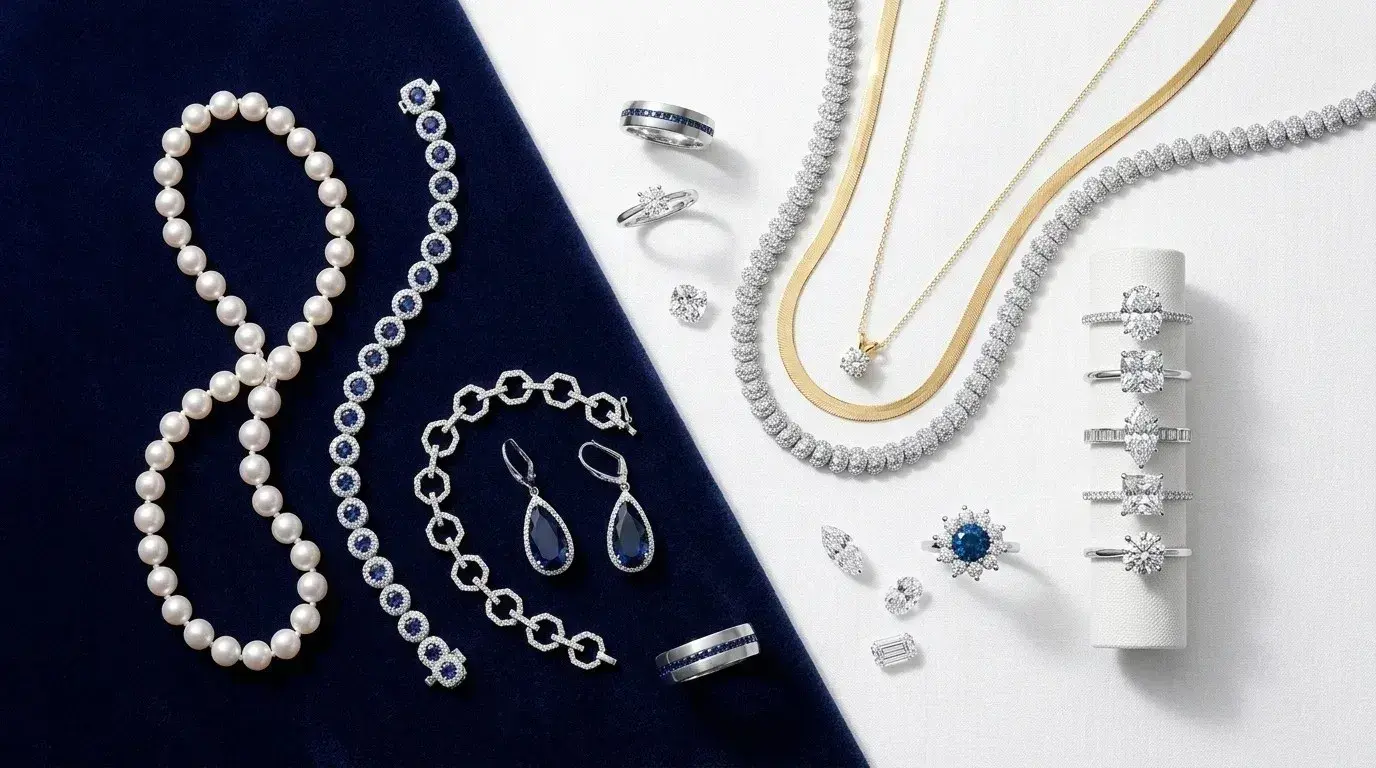
Buying an engagement ring is one of the biggest single jewelry purchases most people make, and doing it online for the first time can feel overwhelming without a clear framework. Blue Nile has been in that exact conversation since 1999 as the original online diamond retailer, and independent authorities like Forbes Vetted named the brand the best place to buy engagement rings online in 2026 for its combination of massive diamond selection and reliable customer service.
This Blue Nile engagement ring buying guide walks through what you actually need to know before you buy, covering diamond quality, ring styles, budgeting realities, natural versus lab-grown considerations, and honest limitations worth setting realistic expectations around. You can also check our own Blue Nile coupons code for the latest verified offers we've tracked, since promotional pricing does move throughout the year.
Why Blue Nile Is Worth Considering
Before jumping into the details, it helps to understand what Blue Nile actually does well. Independent diamond analysts consistently point to a few strengths: a certified diamond inventory of over 111,000 loose diamonds as of early 2026, a straightforward Build Your Own Ring workflow that lets you start from either a setting or a stone, and market longevity that most competitors can't match.
The honest trade-off worth flagging up front is that Blue Nile positions itself as a mainstream premium retailer rather than the deepest discount option or the most bespoke boutique experience. If you want the lowest possible price per carat on a lab-grown diamond specifically, Blue Nile isn't always the cheapest choice. Independent reviewers have also noted that Blue Nile's lab-grown diamond selection has narrowed compared to earlier years, so if lab-grown is your primary interest, comparing directly against lab-first specialists is worth the extra research time.
Understanding the 4Cs: The Foundation of Any Engagement Ring Decision
The 4Cs stand for cut, color, clarity, and carat, and they're the framework every diamond retailer, including Blue Nile, uses to grade and price diamonds. Understanding what each one actually means, and which matters most, is genuinely the most important step in avoiding overspending.
Cut
Cut refers to how well a diamond has been shaped and polished, not to the shape itself. Cut quality has the largest impact on how much a diamond sparkles, and Blue Nile's own experts consistently recommend prioritizing this above the other three Cs. A well-cut lower-carat diamond will look more brilliant than a poorly-cut higher-carat stone.
Color
Color grades run from D (colorless) at the top to Z (light yellow or brown) at the bottom, though most engagement ring diamonds fall between D and J. The truth is that once you get below G, most people can't detect color differences without a trained eye and side-by-side comparison. Blue Nile's own guidance suggests that clarity and color are more difficult for the average person to see than cut and carat, which means dropping a grade or two on color often saves money without visibly compromising the ring.
Clarity
Clarity measures the presence of tiny natural inclusions or blemishes. Grades run from FL (flawless) down to I3 (obvious inclusions visible to the naked eye). For most engagement rings, a VS1 or VS2 clarity grade offers excellent visual quality at a meaningfully lower price than higher grades. A useful buying tip from Blue Nile experts: smaller diamonds under three-quarters of a carat tend to hide inclusions well simply because there's less surface area to see them.
Carat
Carat is the weight of the diamond, not directly its size, though heavier stones do tend to look larger. A classic engagement ring often features a one-carat center stone, with two-carat also popular. One meaningful money-saving tip is to choose a diamond just below a benchmark carat weight, like 0.49 instead of 0.50, since the visible size difference is essentially impossible to detect while the price difference can be substantial.
The key takeaway on the 4Cs: Prioritize cut and carat first since these affect what the eye actually sees. Save money on color and clarity by dropping to grades where differences aren't visible without magnification.
Natural vs. Lab-Grown Diamonds at Blue Nile
Blue Nile offers both natural and lab-grown diamonds, and the differences matter more than the surface pricing suggests.
Lab-created diamonds share identical optical, chemical, and physical properties with natural diamonds, but typically cost 20 to 40 percent less. As of early 2026, buyers could find a one-carat loose lab-grown diamond with strong specifications, around E color, VS1 clarity, and an ideal or excellent cut, for around $650. That kind of pricing makes larger carat weights accessible on smaller budgets.
That said, there are trade-offs worth understanding. Natural diamonds have historically held resale value better than lab-grown, though "resale value" isn't why most people buy engagement rings in the first place. Blue Nile's own guidance recommends applying the same 4Cs criteria to both, prioritizing excellent cut for maximum brilliance, and verifying certification from reputable labs like GIA or IGI before purchase.
The most important consideration: choose whichever type genuinely matches your priorities and budget. Neither is objectively "better" for an engagement ring, and Blue Nile offers meaningful selection on both sides.
Popular Engagement Ring Styles
Blue Nile's Build Your Own Ring workflow gives you enormous flexibility, but understanding the main setting styles helps narrow choices quickly:
Solitaire:
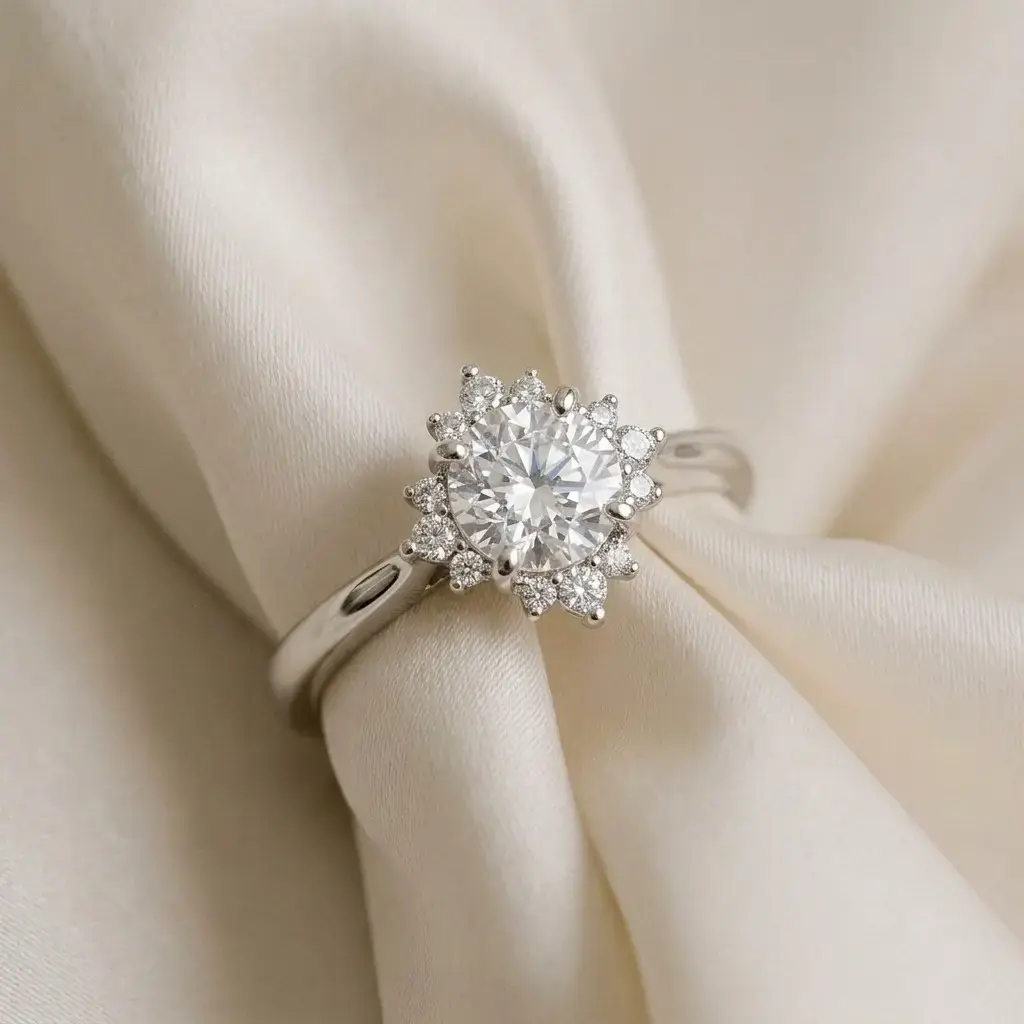
A single center stone in a simple setting, often four or six prongs. Timeless, classic, and puts maximum focus on the diamond itself. Blue Nile's Classic Six-Prong Solitaire in Platinum is a common under-$650 setting that pairs well with almost any wedding band.
Halo:
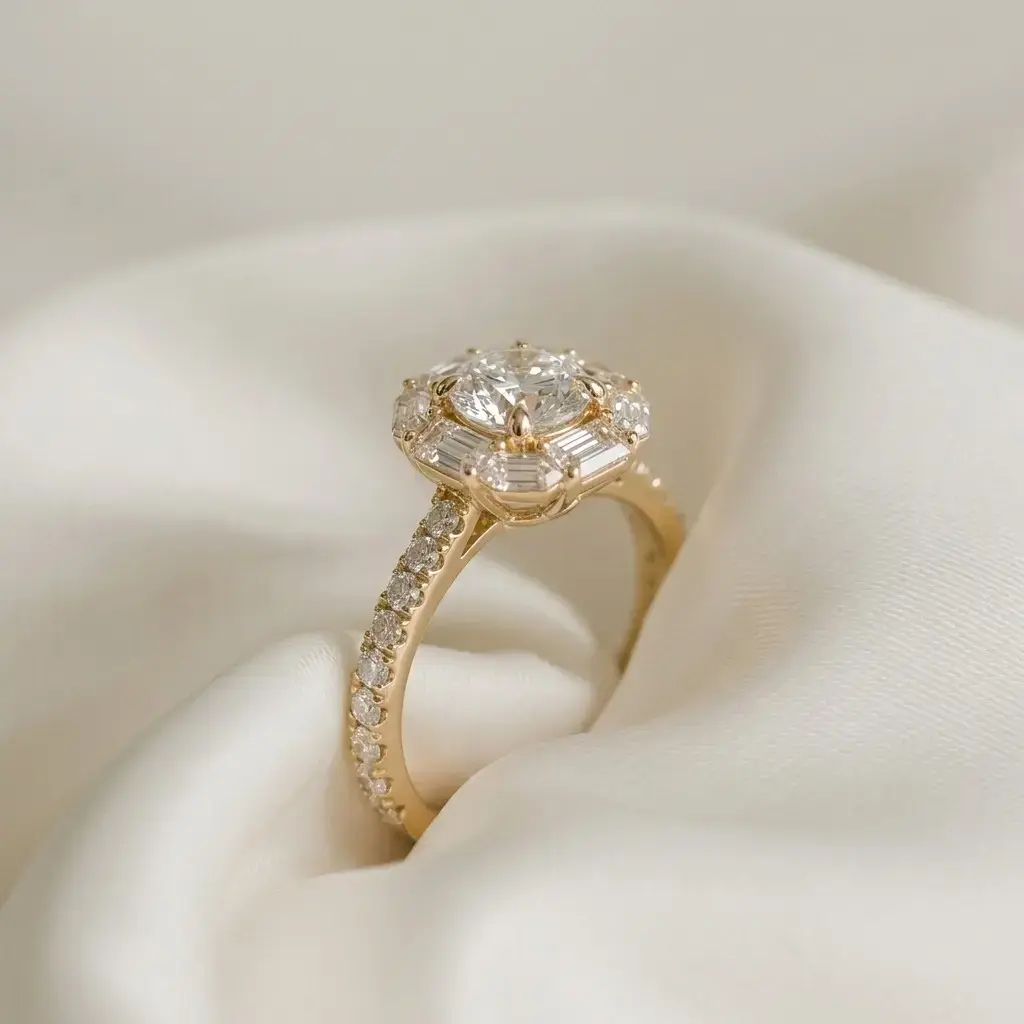
A ring of smaller diamonds surrounding the center stone. Makes the center diamond appear larger and adds visible sparkle.
Three-stone:
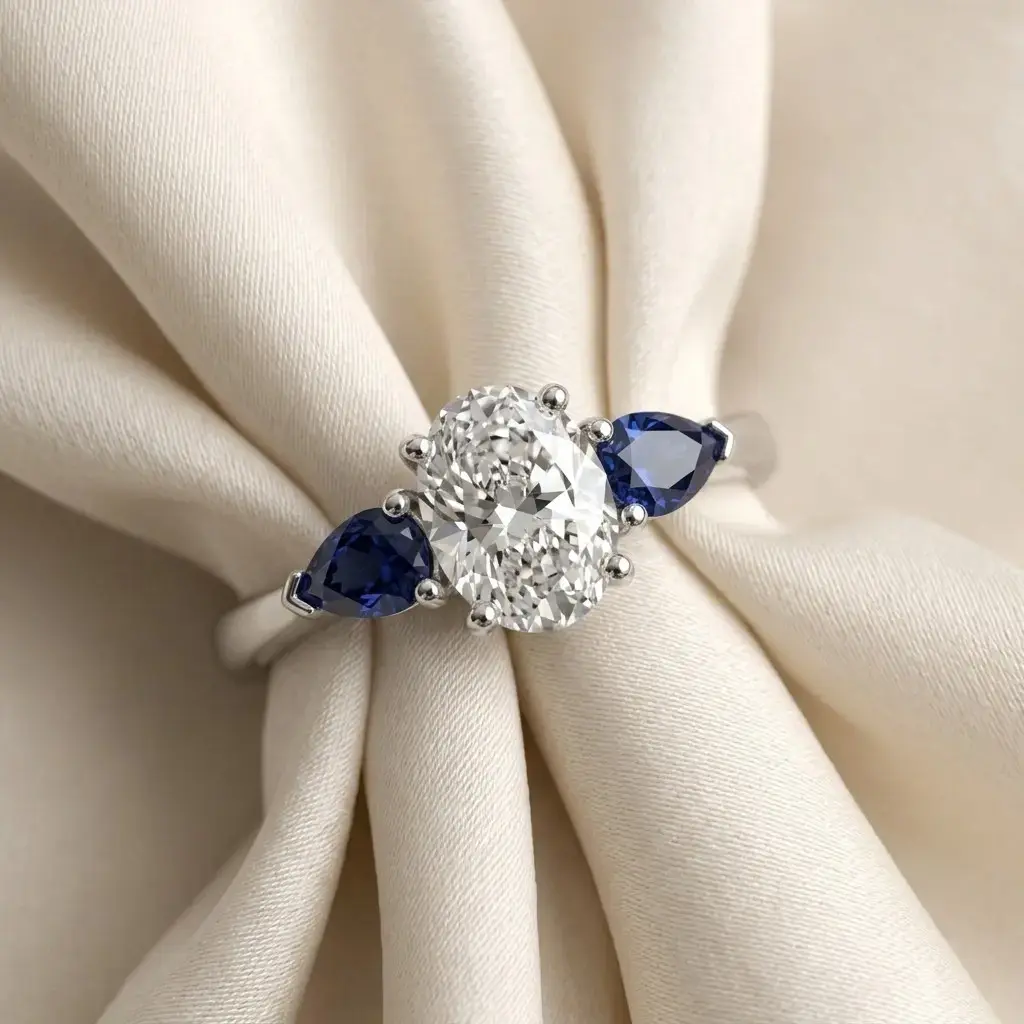
Center diamond flanked by two smaller stones, often meant to symbolize past, present, and future.
Pavé:
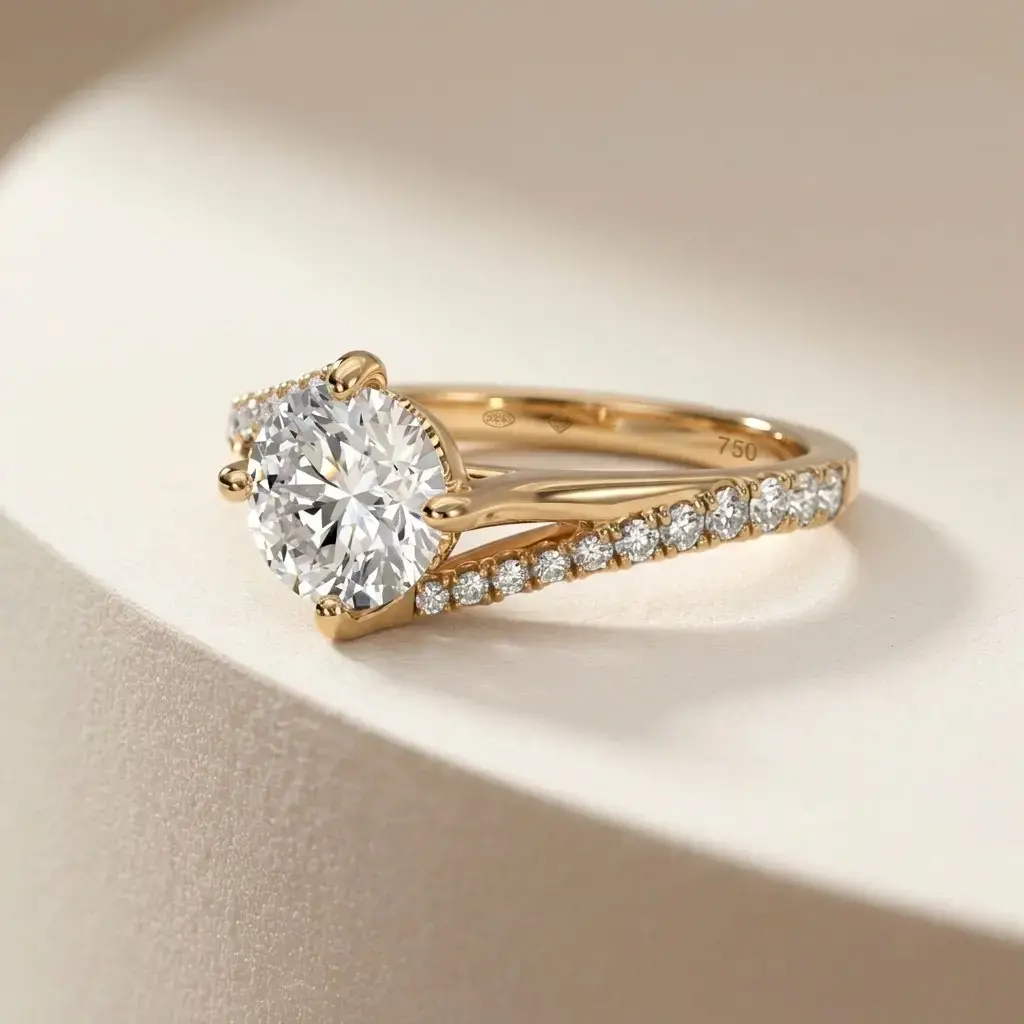
Small diamonds set closely along the band for continuous sparkle across the ring.
Vintage-inspired:
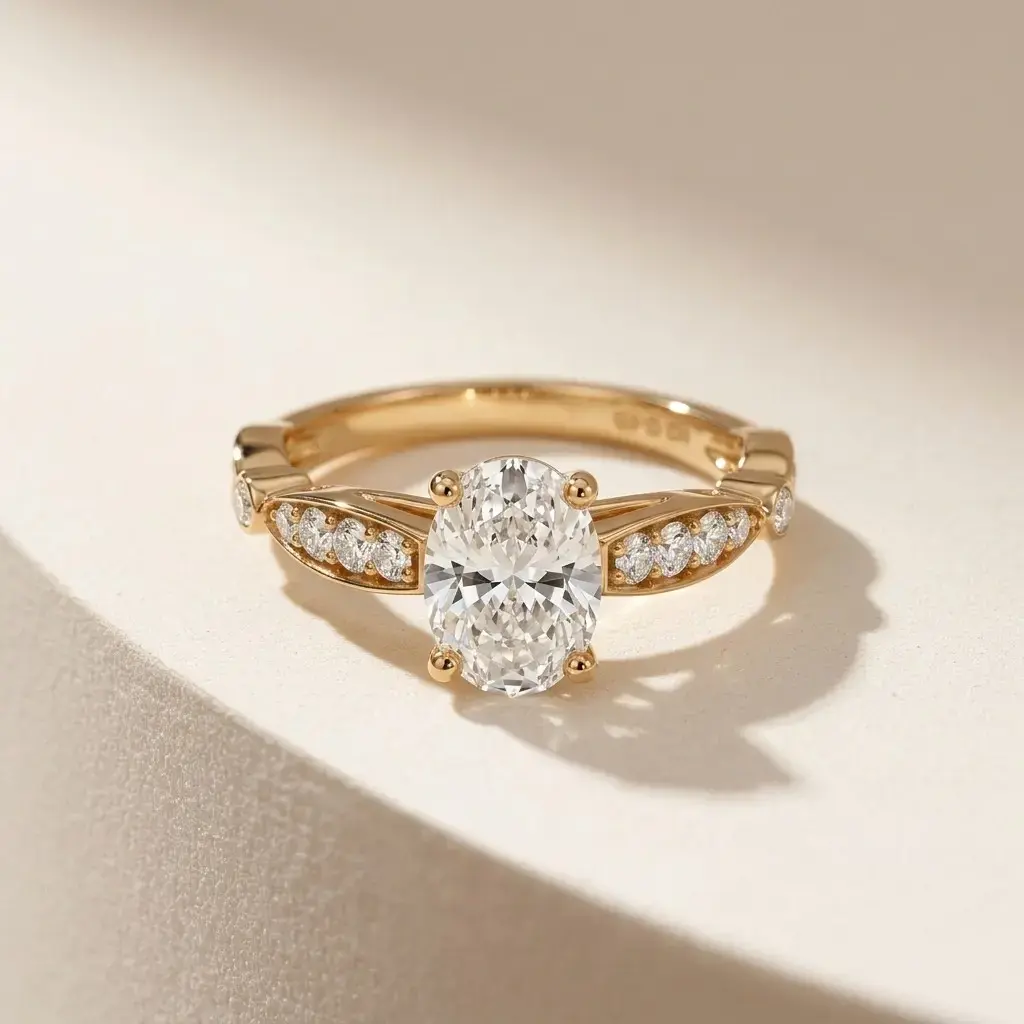
Detailed engraving, milgrain edges, and intricate settings evoking Art Deco or Victorian era aesthetics.
Bezel:
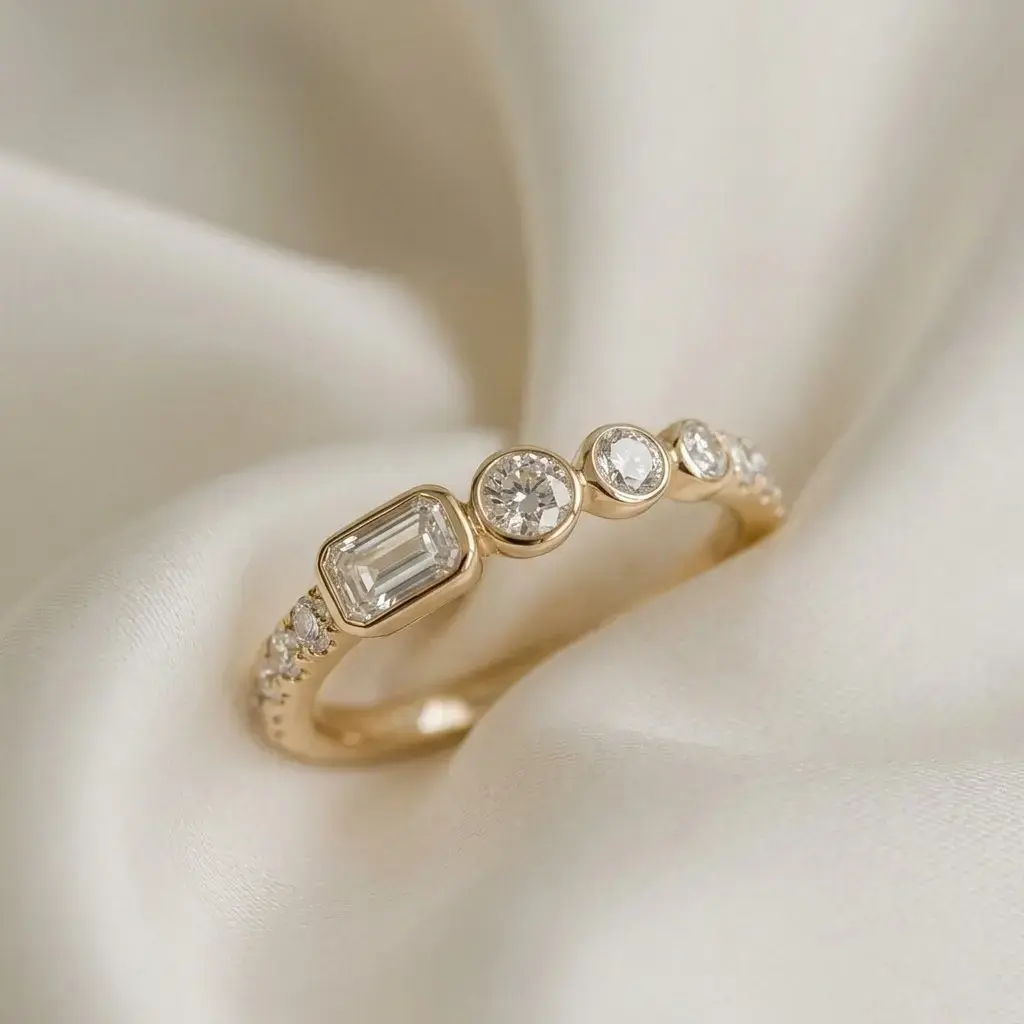
Metal fully surrounds the diamond rather than using prongs. More protective and modern in appearance.
Popular Diamond Shapes and Their Trade-Offs
Beyond round brilliant (which has 60 facets for maximum sparkle), Blue Nile offers nine fancy shapes: princess, emerald, Asscher, marquise, oval, radiant, pear, heart, and cushion. Fancy shapes have a practical benefit worth knowing: they can save up to 25 percent compared to a round brilliant diamond of equal carat weight. If you want visual impact per dollar spent, an oval or pear shape can look meaningfully larger than a round at the same carat weight.
Setting Metals and Their Real Differences
The metal you choose affects both look and long-term wear:
Platinum: Durable, hypoallergenic, and holds its bright white color permanently. Most expensive but often preferred for stones with high clarity where you want maximum brilliance.
White gold: Delivers the platinum look at a lower cost, though requires periodic re-plating with rhodium to maintain the bright white finish.
Yellow gold: Warm, classic, and gaining popularity in recent years. Complements diamonds beautifully and never needs re-plating.
Rose gold: Trending for its romantic, warm-pink hue that particularly suits vintage-inspired designs. Never needs re-plating.
For men shopping men's engagement rings (a growing category), Blue Nile also offers tungsten and mixed-metal options alongside the traditional metals.
How Much Should You Actually Spend?
The old "two or three months' salary" rule is genuinely outdated. Modern engagement ring budgets range dramatically based on personal priorities and financial situation, and Blue Nile's price range extends from around $540 for smaller settings up to $40,000 for premium pieces.
A practical framework: decide what you're comfortable spending based on your actual finances and the recipient's style preferences, then work backward to find the best combination of the 4Cs within that budget. For most buyers, this means prioritizing cut quality, accepting slightly lower color and clarity grades, and considering whether a fancy shape or lab-grown stone helps stretch the budget for a larger visible size.
Blue Nile also offers financing options through partners, letting you spread the cost over several months if that fits your budget better than a single lump payment.
Blue Nile's Key Services That Matter
A few practical services are worth knowing about before you commit:
Free ring sizer: Blue Nile provides a free at-home ring sizer to measure your accurate size, which matters more than most people realize. Fingers fluctuate with temperature, so size in the late afternoon for the most accurate measurement, and go up a half size for wider bands.
30-day return policy: Returns are accepted within 30 days from the shipment date, with a prepaid return shipping label included. Engraved rings cannot be returned, only exchanged or credited, so be certain of the size first if you plan to engrave.
Free limited lifetime warranty: Every Blue Nile ring includes ongoing protection beyond the purchase itself.
Complimentary resizing: Blue Nile offers one free resize within one year of purchase on most gold and platinum rings.
Price-match guarantee: Blue Nile will match qualifying competitor prices, which reduces the risk of buyer's remorse if you find a similar ring cheaper elsewhere.
Diamond upgrade program: Allows you to upgrade to a larger or higher-quality diamond in the future by trading in your original purchase.
Virtual advisors and virtual appointments: Live human help from graduate gemologists through video, particularly useful if you're deciding between multiple options remotely.
Common Blue Nile Buying Mistakes to Avoid
Based on repeated feedback from independent reviewers and buyer forums, a few mistakes come up consistently:
Overspending on color and clarity grades that aren't visible. Going from G color to D adds significant cost without a visible difference to most people.
Ignoring cut quality to chase carat weight. A poorly-cut two-carat diamond will look worse than a well-cut 1.5-carat diamond, and cost more.
Skipping certification verification. Confirm the diamond has independent grading from GIA or IGI, both of which Blue Nile uses across its inventory.
Not using the free ring sizer. Wrong size on an engraved ring means you can't return it, only credit or exchange.
Missing the price-match window. If you find a comparable ring elsewhere, submit the price match before completing checkout rather than after.
Forgetting to factor in insurance. Once you receive the ring, insuring it through a jewelry-specific policy is worth the small annual cost for peace of mind.
The Bottom Line
Buying an engagement ring from Blue Nile in 2026 is a genuinely reliable path for most shoppers, particularly those focused on natural diamonds who want a wide certified selection and a smooth, professional buying experience. The 4Cs framework, honest expectations about which grades matter visually, and the brand's key services like the price-match guarantee, 30-day return window, and lifetime warranty combine to make the process significantly less intimidating than it looks from the outside.
For the latest verified offers, bookmark our Blue Nile promo code, where we track current promotions on engagement rings, settings, and loose diamonds so you can shop with the best available pricing rather than paying full retail on a purchase this important.