

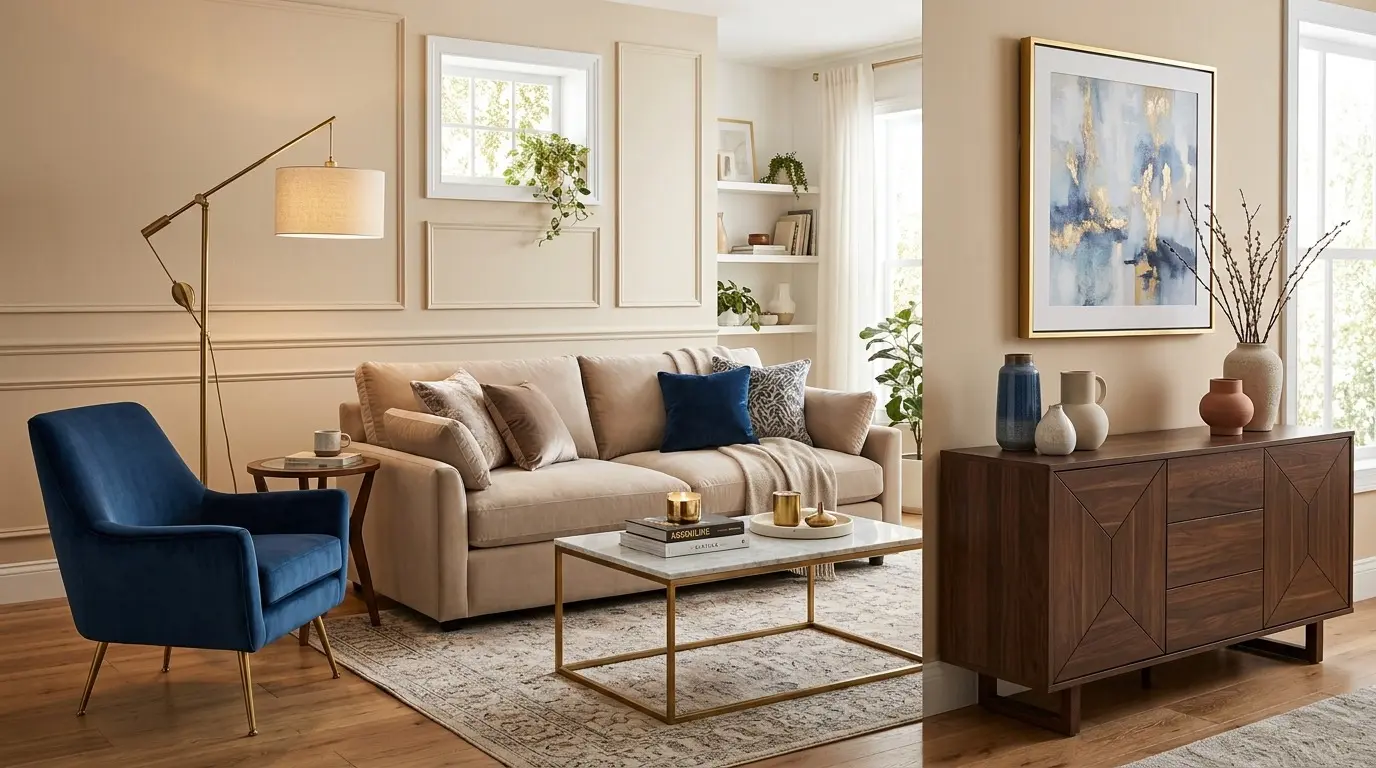
The best luxury living rooms don't announce themselves. They feel curated rather than expensive, calm rather than cluttered, and lived-in rather than staged. That's the design philosophy shaping premium interiors in 2026, and it's genuinely good news for anyone building a luxury living room without an unlimited budget. Modern luxury has moved away from ornate excess toward thoughtful pieces, tactile materials, and layered warmth. The result is a design approach where knowing what to choose matters more than knowing how much to spend.
This guide walks through the practical steps to create a genuinely luxurious living room using the design principles interior designers are actually recommending for 2026, from the core furniture pieces worth investing in to the accessories that pull a room together. You can also check our own Luxe Decor coupons code for verified discounts on premium furniture and accessories, since even a luxury-focused refresh benefits from timing purchases around real sale windows.
What "Luxury Living Room" Actually Means in 2026
Before spending money, it helps to understand what the design world is genuinely calling luxury right now. The dominant trend heading into 2026 is quiet luxury: calm sophistication over showy statement pieces, honest materials over decorative excess, and comfort integrated with elegance. Interior designers describe the mood as "rich, calm, and built to last," with an emphasis on craftsmanship, personalization, and materials that feel authentic.
The evolution beyond pure minimalism is what some publications are now calling "found luxury," a more characterful, lived-in take that embraces collected objects, personal history, and warmth. The specific hallmarks to know:
Curved, sculptural furniture replacing rigid lines and boxy shapes
Warm neutrals (caramel, mushroom, taupe, warm white, beige) replacing clinical grays and stark whites
Layered natural materials (linen, boucle, wool, travertine, walnut, brass) that feel authentic to the touch
Statement lighting as sculpture rather than pure function
Personal, collected objects rather than uniform decorator sets
The core insight: luxury in 2026 rewards restraint plus quality, not accumulation.
Step 1: Start with the Sofa (Your Biggest Investment)
The sofa is the anchor of any living room, and this is where quality genuinely matters more than in almost any other category. A well-chosen sofa will define the entire room's feel and stay in your home for a decade or more, making the cost-per-year math surprisingly reasonable even at higher price points.
What to Look For in 2026
Curved or gently sculpted silhouettes. Deep-cushioned sofas with soft curves have become the defining shape of premium living rooms this year, replacing the rigid rectangular sectionals of previous decades.
Premium upholstery. Full-grain leather, mature boucle, performance velvet, and heavyweight linen are the fabrics defining luxury seating in 2026. Each offers a different mood: leather feels tailored and heritage, boucle feels cozy and warm, velvet feels dramatic, and linen feels calm and organic.
Deep seats and supportive backrests. Actually comfortable seating that invites lingering is central to the quiet luxury philosophy. Skip sofas that look striking but sit shallow or firm.
Neutral colors that age well. Cream, warm beige, muted caramel, and deep charcoal read as luxurious for decades. Bright colors or trend-driven patterns can date a room quickly.
The Chesterfield Reimagined
Modern Chesterfield sofas have made a genuine comeback for 2026, recut with lower backs, wider seats, and contemporary upholstery in linen or nubuck rather than the traditional heavy leather. This is a strong choice if you want a piece with heritage character that still feels current.
Sizing to Your Space
An oversized sofa in a small living room feels cramped. An undersized sofa in a large room feels lost. Measure your space, factor in traffic paths, and consider a sectional for larger rooms or a properly scaled loveseat plus armchair combination for smaller ones.
Step 2: Layer in Complementary Seating
A luxury living room rarely relies on a single sofa. The addition of accent chairs, an ottoman, or a chaise creates visual rhythm, functional flexibility, and the layered feel that defines premium interiors.
Sculptural accent chairs in a contrasting texture add depth. A boucle chair beside a leather sofa, or a caned wood chair beside a velvet one, creates the kind of textural contrast that reads as intentional.
A pair of chairs rather than a single one creates symmetry and encourages conversation. Two matching accent chairs facing the sofa is a design pattern that works reliably across styles.
An ottoman doubling as a coffee table adds function while softening the visual weight of the room.
A small chaise or reading chair in a corner extends the room's usability beyond primary seating.
Step 3: Choose a Statement Coffee Table
The coffee table is smaller than the sofa but genuinely important to the room's overall composition. In 2026, statement coffee tables use natural stone (travertine, marble, honed stone), sculptural wood forms, or a combination of quality metals with organic materials.
Travertine and marble deliver instant luxury impact and pair well with almost any sofa color
Solid walnut or oak brings warmth and reads as heirloom quality
Round or oval shapes align with the curved furniture trend and soften the room's overall visual line
Two nested tables offer flexibility and a more dynamic composition than a single large piece
Step 4: Invest in Layered Lighting
One of the most overlooked luxury design principles is layered lighting. A single overhead fixture makes even the most expensive furniture look flat. A properly lit room uses three to five light sources at different heights.
The Layered Lighting Formula
Ambient overhead lighting (a pendant, chandelier, or sculptural fixture as the primary source)
Two table lamps at either end of the sofa or on side tables
A floor lamp for reading or task lighting near a chair
Wall sconces for architectural interest and a warm glow
Dimmers on everything possible to adjust mood throughout the day
What Makes Luxury Lighting Different
The most current 2026 luxury lighting emphasizes light itself as the design element rather than ornate fixtures. Sculptural forms in alabaster, brass, blown glass, or ceramic create presence without decorative excess. A single well-chosen sculptural pendant can transform a room in a way that no amount of decorator objects can match.
Step 5: Anchor the Room with a Quality Rug
A luxury living room needs a rug that ties the seating area together visually. In 2026, this typically means:
A rug large enough to sit under the front legs of all major seating pieces. Too-small rugs are one of the most common signs of an amateur styling job.
Natural fibers (wool, jute blends, silk blends) rather than synthetics
A neutral base that lets the furniture read as the focal point, with subtle pattern or texture rather than bold graphic prints
Layered rugs for added texture and warmth in larger rooms (a smaller vintage or textured rug layered over a larger neutral base)
Step 6: Add Personal Character with Accessories
This is where "found luxury" replaces the sterile perfection of pure minimalism. The pieces that give a room genuine character are almost always the ones with personal meaning: art you actually love, ceramics from a special trip, books you actually read, family heirlooms integrated into the design.
The Accessory Categories That Matter Most
Original art or well-framed prints at a scale appropriate to your wall. Oversized wall art has become one of the defining trends of 2026, replacing collections of smaller pieces.
Sculptural ceramics or vases in materials like handmade pottery, blown glass, or matte metal
A few well-chosen coffee table books on subjects you actually care about
Textiles as accents (a throw blanket in boucle, wool, or cashmere; two or three pillows with meaningful texture)
Fresh flowers or a single well-cared-for plant in a simple vessel
A pair of bookend-quality decorative objects rather than dozens of small tchotchkes
Step 7: Choose a Warm, Cohesive Color Palette
The color story of 2026 luxury living rooms is warm and grounded rather than cool and clinical. The dominant palette:
Warm whites and creams as the base
Caramel, mushroom, and taupe as the mid-tones
Deep grounding accents in navy, forest green, plum, or rust
Natural wood as an integrated warmth layer
Skip pure grays, stark whites, and cool blues as your dominant color story. These read as dated compared to the warm minimalism defining current luxury.
What NOT to Do When Creating a Luxury Living Room
Being honest about common pitfalls:
Don't fill the room with matching furniture sets. Coordinated but not identical is the goal. A matching sofa, loveseat, and chair set reads as retail-showroom rather than curated.
Don't skip the rug. Bare floors under seating groupings make even expensive furniture look ungrounded.
Don't rely on a single overhead light. This is the fastest way to make luxury furniture look ordinary.
Don't over-style with accessories. Empty space is a design element. Overcrowded surfaces are the opposite of luxury.
Don't chase trends at the expense of longevity. A well-chosen neutral sofa will outlast a bold-colored one, and quality craftsmanship outlasts current fashion in every direction.
Don't skimp on lighting fixtures. Premium lighting genuinely reads as luxury in a way that additional accessories don't.
Don't ignore acoustics. Textiles (rugs, drapes, upholstery, throws) meaningfully affect how a room sounds, and a room that echoes never feels luxurious regardless of how it looks.
A Realistic Luxury Living Room Budget
Being honest about pricing: a genuine luxury living room refresh runs across a wide range depending on your starting point and priorities. Rough benchmarks for the core categories:
Sofa: $1,500 to $6,000 for genuinely high-quality construction
Two accent chairs: $800 to $3,000 combined
Coffee table: $500 to $2,500
Area rug (8x10 or larger): $500 to $3,000
Lighting (pendant plus two lamps plus floor lamp): $600 to $2,500
Art and accessories: $500 to $2,500
Realistic total for a full luxury refresh: $4,400 to $19,500
The wide range reflects the difference between a mid-tier luxury approach (accessible premium brands, timed sale purchases) and a full high-end approach (designer pieces at full retail). Both can produce genuinely luxurious results, since the design principles matter more than the specific price of any single piece.
When Luxury Furniture Actually Goes on Sale
Timing genuinely matters when building a luxury living room, since premium furniture brands run consistent sale windows:
Memorial Day and Labor Day sales. Traditional US furniture sale holidays with meaningful discounts across major categories.
Presidents' Day sales. Often the first meaningful sale window of the year.
Black Friday and Cyber Monday. The deepest discount windows for premium furniture, with sitewide markdowns that often exceed 30 to 40 percent.
End-of-season clearance. Winter (January to February) and summer (July to August) both push seasonal inventory into meaningful markdown territory.
Prime Day. A growing furniture sale window, particularly for accessories, lighting, and smaller pieces.
Fourth of July sales. Solid mid-year discount window across most premium furniture brands.
Waiting for the right sale can meaningfully reduce a luxury living room budget without compromising quality. The furniture that shows up in these sales is the same furniture available at full retail during other times of the year.
The Bottom Line
Creating a luxury living room in 2026 comes down to design principles more than dollar amounts. Invest in a quality sofa as your anchor, layer in complementary seating with textural contrast, choose a statement coffee table and rug, build layered lighting rather than relying on overhead alone, and finish with personal accessories that give the room character. Combined with timing major purchases around real sale windows and prioritizing warm neutrals plus tactile natural materials, you can create a genuinely luxurious living room without paying full retail on every piece.
For verified discounts on premium furniture and accessories, bookmark our Luxe Decor promo code, where we track current offers so you can build a luxury living room without paying full price on the pieces that regularly go on sale.