

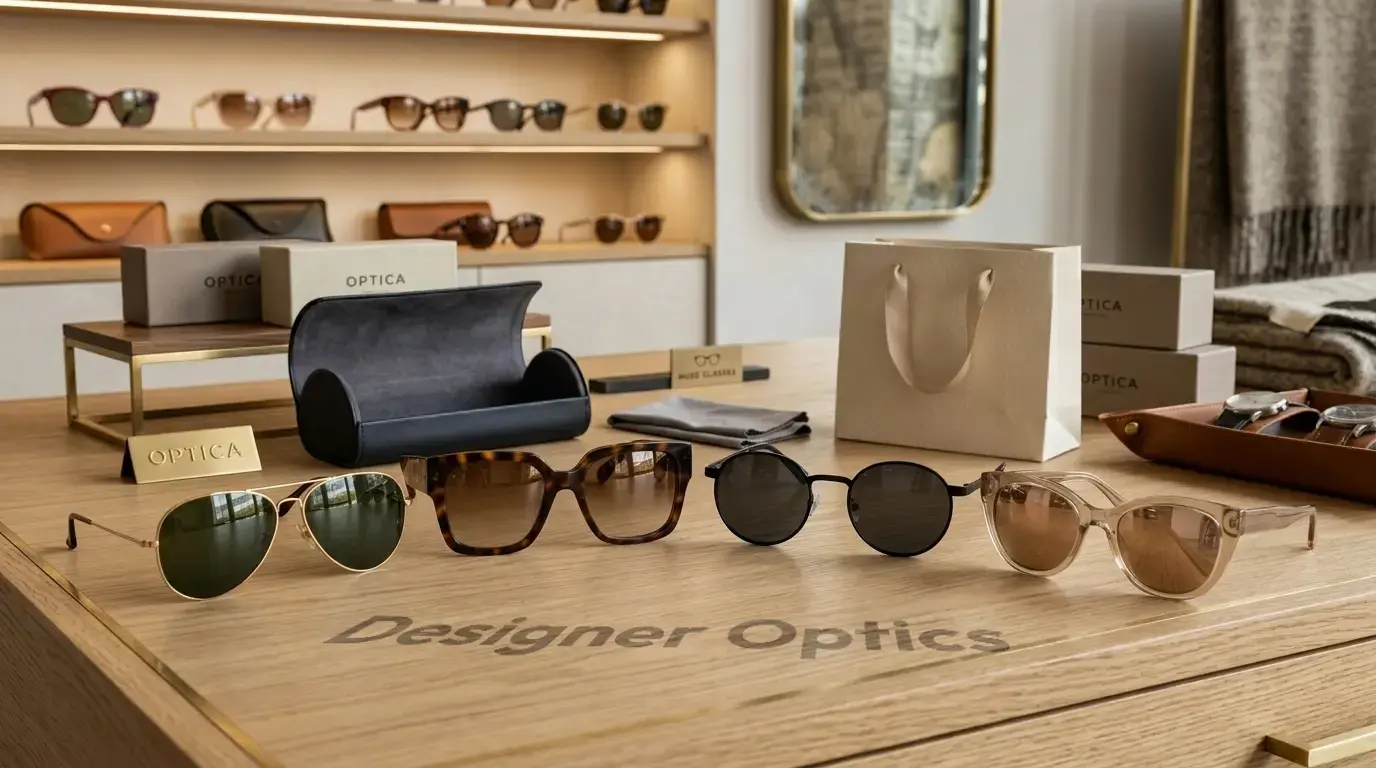
Here's something most sunglasses marketing won't tell you directly: a $25 pair and a $250 pair can use nearly identical lens materials, polarized films, and UV protection. What separates them is often branding, distribution, and design, not the fundamental thing your eyes actually need protected. Learning how to save on designer sunglasses without sacrificing quality starts with understanding exactly what you're paying for at each price tier, so you can spend more where it genuinely matters and less where it doesn't.
This guide breaks down the real science behind UV protection, how to authenticate a designer pair before you buy secondhand, and specific strategies for getting genuine designer quality without paying full markup. You can also check our own Designer Optics deals page for verified discounts on authentic designer sunglasses, since timing your purchase around a real sale is one of the most effective savings strategies of all.
The One Number That Actually Matters: UV Protection
Before anything else, understand this: the single most important spec on any pair of sunglasses, designer or not, is UV protection, and it has almost nothing to do with price. Look for a label reading UV400 or 100% UVA/UVB protection. The American Academy of Ophthalmology has linked chronic UV exposure to cataracts, macular degeneration, and pterygium, so this isn't a cosmetic detail, it's the actual health function sunglasses exist to serve.
Here's the part that surprises most shoppers: UV400 lenses are inexpensive to produce. A $15 pair from a gas station can have full UV400 protection, while a $400 designer pair could theoretically lack it if the tint is purely decorative rather than functionally coated. Darker lenses don't automatically mean better protection either; a dark, untreated lens can actually be worse for your eyes than a lighter, properly coated one, since your pupils dilate in response to the darkness, letting in more unfiltered UV light if the coating isn't there.
The practical takeaway: never assume price guarantees UV protection. Always check for an explicit UV400 or 100% UVA/UVB label regardless of the brand or price tag in front of you.
What You're Actually Paying for at Each Price Tier
Understanding the real price-to-value breakdown helps you decide where spending more genuinely buys something meaningful:
Under $25: Basic Protection
Simple frames with adequate UV protection, functional as a backup pair for a car or gym bag, but not built for daily heavy use or long-term durability.
$25 to $50: The Practical Sweet Spot for Function
Better frame materials, more style variety, and often polarization or scratch-resistant coatings included. Several direct-to-consumer brands in this range use injection-molded TR-90 or nylon-blend frames with polycarbonate, UV400, polarized lenses that functionally perform similarly to gear that cost five times more a decade ago.
$40 to $100: Better Coatings and Design Variety
This tier typically adds hydrophobic or oleophobic coatings, anti-reflective treatment on the lens's back surface, and a wider range of frame styles and materials.
$100 to $250: Where Real Engineering Starts
Above $100, you're generally paying for one of three things: genuine optical engineering (specialized lens technologies from brands with real research investment), true craftsmanship (handmade acetate, premium hinges), or brand cachet. The first two are worth paying for if they matter to your specific use case; the third is worth being honest with yourself about.
$250 to $400: The Designer Sweet Spot
Multiple industry sources point to this range as the genuine "sweet spot" for designer sunglasses, where you're getting real material quality and design without moving fully into limited-edition, prestige-driven pricing. Above roughly $400, you're increasingly paying for brand exclusivity and limited-run design rather than a meaningful jump in actual eye protection or durability.
Smart Strategy #1: Buy Two Pairs Instead of One
One of the more counterintuitive but genuinely effective savings strategies: rather than buying a single expensive pair meant to do everything, consider a sub-$40 functional pair for daily use, travel, and the sunglasses you'll inevitably lose or scratch, paired with a separate designer pair reserved for occasions where appearance matters more than rugged function. Combined, this two-pair approach often costs less than a single premium designer purchase while covering more real-world use cases without risking your nicer pair to gym bags, beach sand, or a forgotten spot on a restaurant table.
Smart Strategy #2: Understand Lens Categories Before You Buy
Sunglasses lenses are typically graded on a tint category system from 1 (lightest) to 4 (darkest), with most designer brands using category 3 as the standard, dark enough for comfortable daytime wear, light enough to remain safe for driving. Category 4 lenses are too dark for driving. Knowing this prevents an expensive mistake: buying a striking, ultra-dark designer pair only to discover it's genuinely unsafe for the daily commute you bought it for.
If polarization matters to you, particularly for driving, water activities, or snow, confirm it separately from UV protection. The two features aren't automatically combined, and checking specifications carefully before buying avoids paying designer prices for a pair that's missing a feature you actually needed.
Smart Strategy #3: Consider Designer-Adjacent and Lookalike Options
A thriving market exists for well-made sunglasses that echo popular designer silhouettes, oversized frames, metallic cat-eye shapes, and classic aviator profiles, without carrying the associated logo markup. The key filter to apply here: confirm genuine 100% UV protection on any lookalike option, since the entire point of this strategy falls apart if the pair looks the part but skips the actual eye protection. Retailers focused specifically on this category typically state UV400 compliance clearly in the product description, which makes it easy to verify before buying.
Smart Strategy #4: Buy During Real Sale Windows
Designer sunglasses brands run genuine seasonal and holiday sales, and timing a purchase around these windows is one of the simplest ways to access authentic designer quality below full retail. This is meaningfully different from buying a cheaper lookalike; you're getting the actual brand, materials, and craftsmanship at a real discount rather than substituting a different product entirely.
How to Authenticate Designer Sunglasses (Especially Secondhand or Resale)
If you're buying designer sunglasses secondhand, at a discount retailer, or from a resale marketplace, a few checks help confirm you're getting the genuine article:
Check for a serial number etched into the lens or the inside of the arm. Most authentic designer pairs include this detail; its complete absence is a red flag.
Inspect the hinges. Genuine designer construction uses quality metal hinges that open and close smoothly. Cheap counterfeits often use plastic hinges that creak or feel loose.
Confirm it comes with proper documentation. A certificate of authenticity and a branded case are standard inclusions with new designer purchases and are worth asking about specifically when buying secondhand.
Look at lens etching and logo placement. Authentic designer lenses typically include a small etched logo in a consistent, brand-specific location. Blurry, off-center, or missing etching is worth investigating further before you buy.
Be skeptical of steep discounts on "new" designer pairs from unverified sellers. A genuine designer pair rarely trades at 80 or 90 percent off through anything other than an authorized retailer's own clearance or sale event.
What Actually Justifies a Higher Price
To be fair to premium eyewear, some higher-price features are genuinely worth paying for if they match your needs:
True optical engineering. Specialized lens technologies developed by brands with real research investment in glare reduction and color enhancement offer a measurably different visual experience than a standard tinted lens, worth the premium for anyone who spends significant time driving, boating, or outdoors in bright conditions.
Glass lenses versus polycarbonate. Premium brands using genuine glass lenses offer superior optical clarity compared to polycarbonate, though at the cost of added weight and higher breakage risk if dropped.
Handmade acetate frames. Genuine hand-finished acetate construction, often using premium Italian sheet material, offers a different comfort and durability profile than injection-molded plastic frames, particularly over years of regular use.
RX-able frames. Many designer frames can have their lenses swapped by an optician for a prescription, meaningful if you want a single frame that serves as both sunglasses and prescription eyewear over time.
The Bottom Line
Saving on designer sunglasses without sacrificing quality comes down to separating what you're actually paying for at each price tier. UV protection is inexpensive at every price point, so never assume a designer label guarantees it. Real premiums are justified by genuine optical engineering, craftsmanship, and design exclusivity, and the smartest shoppers buy real designer pairs during legitimate sale windows rather than settling for either full retail or an unverified counterfeit.
For verified discounts on authentic designer eyewear, bookmark our Designer Optics deals page, where we track current offers so you can get genuine designer quality without paying full retail.