

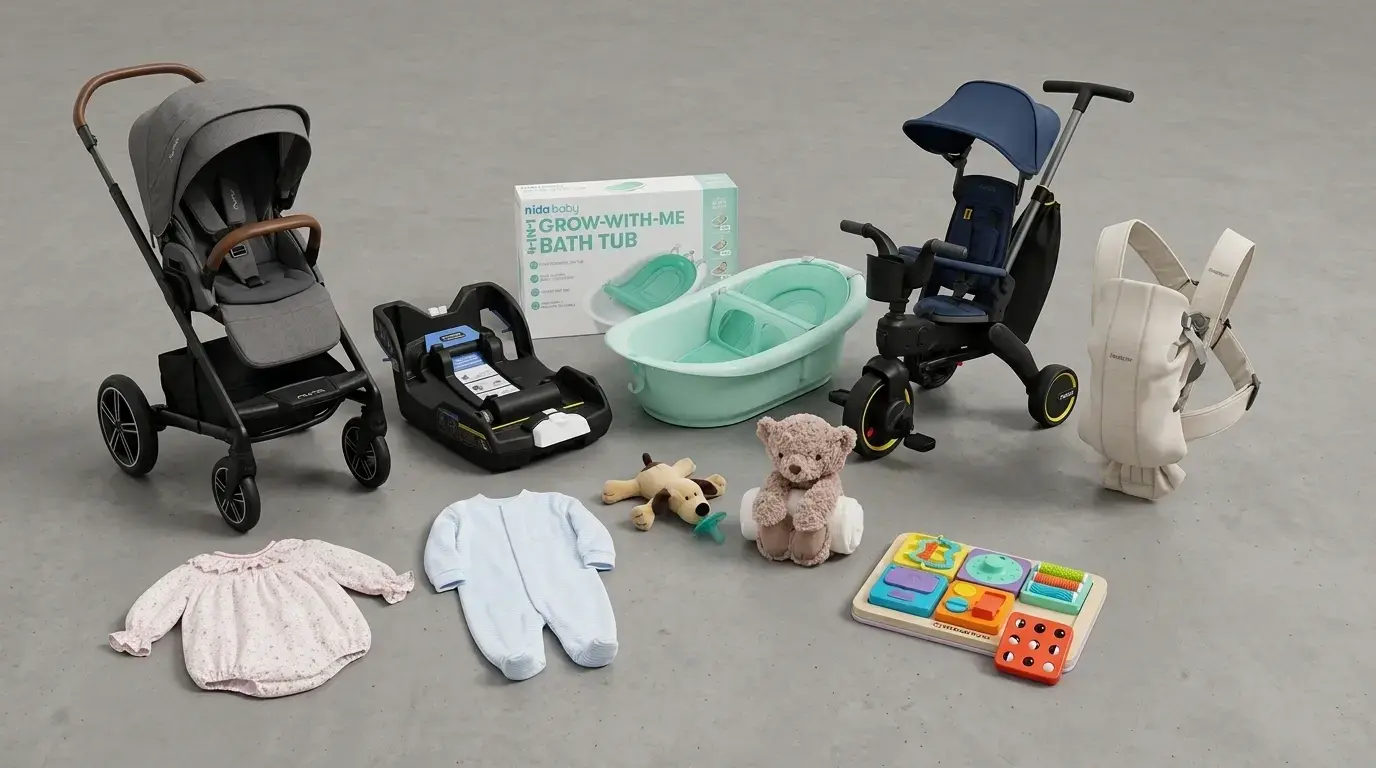
Somewhere between the excitement of a positive pregnancy test and the reality of a hospital discharge date, most new parents find themselves staring at a baby registry checklist with 150 items on it and no idea which ones actually matter. Experienced parents consistently report that roughly half of what they bought for their first baby went completely unused, while a handful of items became things they reached for every single day.
This new parent essentials checklist cuts through that noise. Rather than listing everything a store wants to sell you, this guide separates what's genuinely worth the money from what you can skip entirely, backed by real safety guidance and honest budget numbers. You can also check our own Baby Bliss coupons code for verified discounts on baby gear and essentials, since many of the higher-ticket items below are worth timing around a sale.
How Much Does This Actually Cost?
Before the item-by-item breakdown, it helps to set realistic budget expectations. A full registry covering all essentials typically runs somewhere between $1,500 and $2,500 for a lean approach, while a more complete setup with premium gear across every category can reach $3,500 to $6,000 before accounting for gifts. Smaller items like thermometers and grooming kits usually run $20 to $50 each, feeding gear and carriers land in the $60 to $230 range, and big-ticket items like strollers, monitors, and bassinets can run $200 to $900 individually.
The good news is that registry culture in the US genuinely helps here. Because friends and family often buy directly off a registry, big-ticket items like the crib, stroller, and car seat frequently arrive as gifts, which means it's smart to point your own early spending toward the consumables, diapers, wipes, and formula, that rarely show up as registry gifts but get used constantly.
What's Genuinely Worth the Money
A Properly Installed Car Seat
This is non-negotiable, not a preference. Hospitals will not discharge a newborn without a properly installed rear-facing car seat, and this is the one item on this entire list you should have fully set up and inspected before your due date, not after. Spend real money here if your budget allows it; this is genuinely one purchase where quality and proper fit outweigh cost-cutting.
A Reliable Baby Monitor
Whether you choose a basic audio-only monitor or a smart video model that tracks movement and breathing patterns, a monitor is one of the few items nearly every parent describes as essential rather than nice-to-have. A basic audio monitor works perfectly fine for most families; smart monitors add convenience but aren't a safety requirement.
A Firm Crib Mattress and Fitted Sheets
The actual safe-sleep setup is remarkably simple: a firm mattress and a fitted sheet, nothing else. This isn't a money-saving tip so much as it is the official safety guidance. The American Academy of Pediatrics recommends room-sharing without bed-sharing for at least six months, ideally up to twelve months, to reduce the risk of sleep-related infant deaths.
A Good Nursing Pillow (If Breastfeeding or Bottle-Feeding)
Within minutes of holding a newborn for a feeding session, most parents understand why a supportive nursing pillow is worth the money. Look for a deep, flat surface and an adjustable, secure waistband rather than a generic pillow shape.
A Breast Pump (If Applicable)
For breastfeeding parents, a reliable breast pump is consistently rated as essential rather than optional. Many insurance plans cover a breast pump at no cost, so it's worth checking your coverage before purchasing one out of pocket.
A Diaper Pail With Odor Control
Not glamorous, but genuinely one of the highest-impact small purchases for daily quality of life, especially in smaller living spaces where nursery odor control matters more than people expect going in.
A Convertible or Modular Car Seat and Stroller System
While the initial infant car seat is often a gift, a convertible car seat that grows with your child, or a modular stroller system, tends to spread its cost over years of use rather than being replaced every few months. These are worth the higher upfront price if your budget allows, since the cost-per-use ends up remarkably low.
Diaper Cream (a Genuinely Beloved Category)
This sounds like a small detail, but experienced parents consistently name a good diaper cream as one of the few small products they'd never skip on a second baby. It's inexpensive relative to how often it gets used, which makes it an easy "worth it" call.
What You Can Skip
Crib Bumpers
This isn't a matter of personal preference, it's a safety issue. The American Academy of Pediatrics has been clear that crib bumpers pose real suffocation, strangulation, and entrapment risks, and they've actually been banned from manufacture and sale in the US since 2022 under the Safe Sleep for Babies Act. If you see a crib bumper being sold or gifted, it should not go in the crib regardless of how the packaging is marketed.
Wipe Warmers
A frequently cited "skip it" item across parenting guides. Babies adjust to room-temperature wipes without issue, and a wipe warmer adds cost and counter space for a problem that mostly doesn't exist.
Elaborate Crib Bedding Sets
Beyond the safety issue with bumpers specifically, full matching crib bedding sets (blankets, pillows, decorative shams) aren't safe for the crib itself under current safe-sleep guidance. Save the money and buy a couple of well-fitting sheets instead.
Elaborate Diaper Disposal Systems
Regular trash bags, taken out regularly, work just as well as a specialized diaper disposal system for most families. If nursery odor genuinely bothers you, a basic odor-control pail (mentioned above) solves the problem without the premium price tag of some disposal systems.
A Dedicated Baby Food Maker
Once your baby reaches the stage for solid foods, a regular blender or even a fork does the job just as well as a specialized baby food maker. This is a classic example of a product solving a problem that a tool you already own can handle.
Shoes for a Non-Walking Baby
Cute, but functionally unnecessary until your baby is actually walking. Soft socks or booties serve the same warmth purpose at a fraction of the cost.
Buying Too Much Newborn-Size Clothing
Newborns grow out of the newborn size faster than most first-time parents expect. Buy a small amount of newborn-size clothing and prioritize the 0 to 3 month and 3 to 6 month sizes instead, since babies spend meaningfully more time in those ranges.
Items Where It Depends on Your Baby
A few categories are worth waiting on rather than buying or skipping outright:
Pacifiers: Some babies take to them immediately; others want nothing to do with them. Wait and see how your baby responds after birth rather than stocking up in advance.
Specific bottle brands: Newborns can be surprisingly particular about nipple flow and shape. Buy one or two of a stage 1 slow-flow bottle first before committing to a full set of a single brand.
Baby carriers and wraps: Preferences vary significantly by parent comfort and baby temperament. If possible, try a friend's carrier before buying your own, since fit and comfort are highly individual.
A Simple Timeline for Buying
Babies don't always wait for their due date, so spreading your prep out is worth doing for your own peace of mind:
By 34 weeks: Have your core safety essentials ready, car seat installed and inspected, crib and firm mattress set up, and a going-home outfit selected.
32 to 36 weeks: This is the typical baby shower window in the US, so hold off on purchasing higher-ticket registry items you're hoping will be gifted until after your shower.
After the shower, before delivery: Fill in whatever wasn't gifted, focusing on the true safety essentials first.
After birth: Everything else, seasonal clothing, toys, and anything dependent on your specific baby's preferences, can genuinely wait.
Tips for Stretching Your Budget
Point your own spending at consumables. Diapers, wipes, and formula rarely show up as registry gifts but get used daily, making them the smartest place to spend your own money rather than on big-ticket items friends and family may want to gift.
Buy convertible and modular gear when possible. A convertible car seat or modular stroller system costs more upfront but spreads that cost over years, often working out cheaper per use than replacing single-stage items repeatedly.
Wait on baby-dependent categories. Pacifiers, specific carriers, and bottle brands are genuinely worth waiting to buy until you know your baby's preferences, rather than guessing and returning items later.
Watch for sales on big-ticket items. Strollers, monitors, and car seats are exactly the kind of purchase worth timing around a seasonal sale rather than buying at full price the moment you start shopping.
Check insurance coverage for breast pumps before buying one out of pocket, since many plans cover this at no cost.
Skip anything that duplicates a tool you already own, like a dedicated baby food maker when a blender does the same job.
The Bottom Line
Building a new parent essentials checklist doesn't have to mean buying everything a registry site suggests. Prioritize genuine safety essentials first (a properly installed car seat, a firm crib mattress with a fitted sheet, and a reliable monitor), spend your own money on consumables that rarely get gifted, and hold off on anything dependent on your specific baby's preferences until after they arrive. The items worth skipping entirely, crib bumpers, wipe warmers, and elaborate bedding sets among them, will save you real money without costing you anything in safety or convenience.
For verified discounts on the essentials that are actually worth buying, bookmark our Baby Bliss promo code, where we track current offers on strollers, monitors, feeding gear, and nursery essentials so you can build your checklist without paying full price on every item.